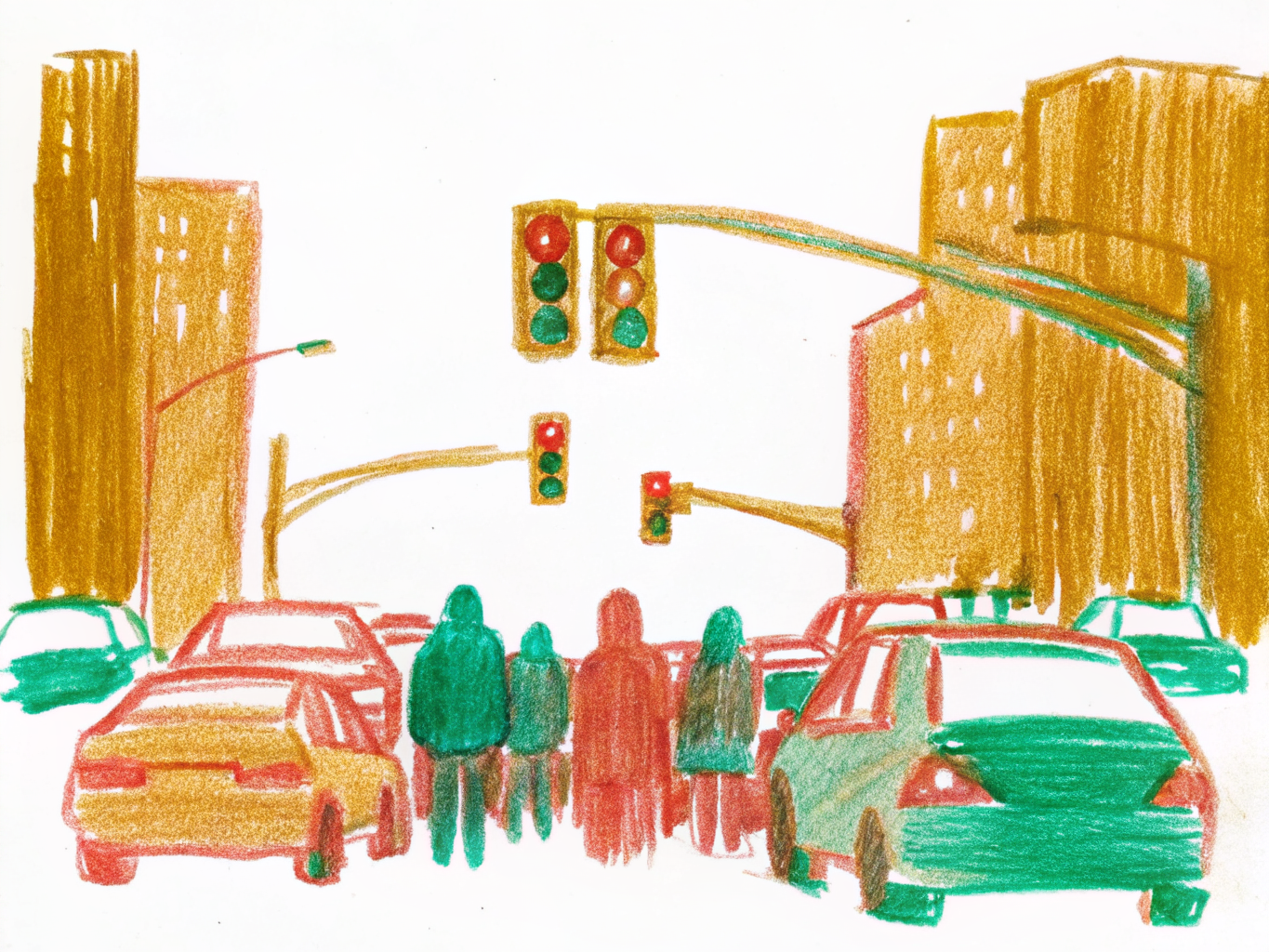
Astoria riders watching N trains stack at the northern terminus wonder whether new digital-sign cars will speed turnarounds. The fleet cascade delivers displaced R68s first — not NTTs — and the real constraint at Ditmars is the signal system, not the destination boards.
Riders on the N in Astoria know the scene: trains bunched south of the terminal, a gap with nothing Manhattan-bound, four consists visible between two stations but none of them moving. The terminal at Astoria–Ditmars Boulevard — a stub-end station above 31st Street in Queens, two tracks and an island platform with bumper blocks at the north end — generates real congestion. Whether new rolling stock can fix it is a reasonable question. The answer, grounded in the fleet cascade now underway and the track geometry, is more sobering than riders might hope.
The cars. The MTA's Kawasaki-built R211 "New Technology Train" sets — with LED digital destination signs, wider doors, and Communications-Based Train Control (CBTC) capability — are currently assigned to the A, B, C, D, and G lines. As of July 2025, no R211s run the N or W. The fleet cascade works like this: R211As are displacing 1980s-era R68s from the D line, and those freed R68s are heading to the N, Q, and W to retire the older R46s. Astoria riders waiting for digital destination signs are waiting on a hand-me-down fleet, not new technology trains.
The sign-change question. The logic behind the "faster signs, faster turnaround" theory is understandable: on the R68, operators must walk the train and physically crank a roll sign from N to W or back. On an R211, it's a button. But the difference is seconds — noise against what actually sets the minimum interval at a stub terminus. At Ditmars, arriving trains stop at the bumper blocks, clear passengers, change ends, and depart from the same pair of tracks. Crossovers just south of the platform allow trains to reach the correct departure track, but the geometry itself doesn't change with the car order.
The signal constraint. What governs minimum headway at Ditmars is not the destination boards — it's the signal system. The BMT Astoria Line has not been equipped with CBTC, the technology already installed on the Queens Boulevard trunk lines that allows trains to follow each other at shorter intervals by tracking position continuously. R211s carry both CBTC hardware and the older pulse-code cab signaling for non-CBTC territory, but a CBTC-capable car running over traditional wayside blocks derives no headway benefit from the CBTC equipment. The block is the limit. The car's sign type doesn't move it.
Installing CBTC on the Astoria Line — seven stations, elevated, a relatively short corridor — would require wayside infrastructure work independent of any car order. Until that happens, riders at Astoria Boulevard who can watch the Ditmars platform fill with trains they can't board are watching a signal-system problem. The fleet cascade will eventually bring newer cars to the line. The congestion that stacks them at the terminal runs deeper than the signs on the front.
