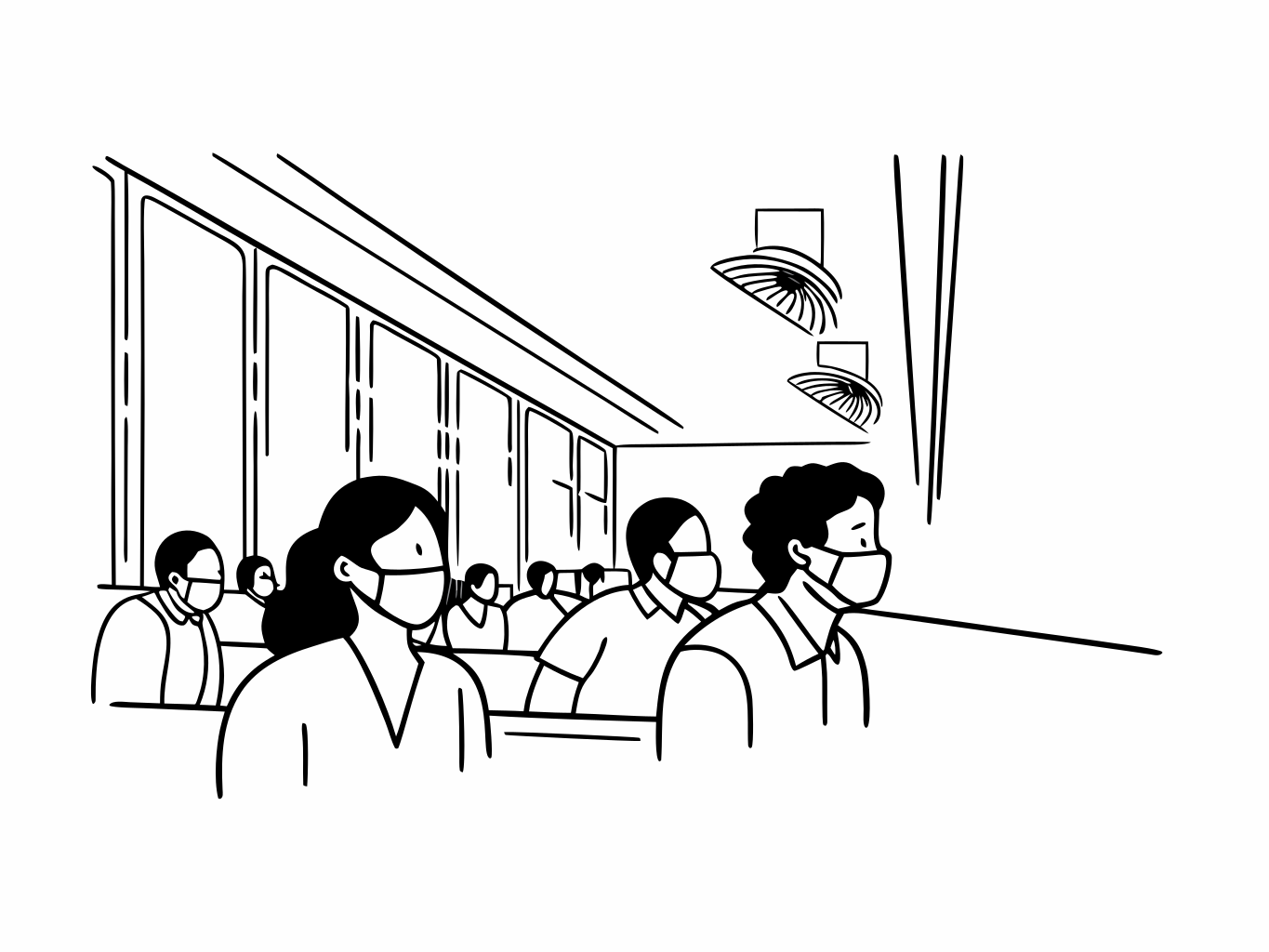
As smoke from Ontario wildfires pushed parts of the five boroughs to "unhealthy" air quality on July 15, the city deployed libraries as both cooling centers and free mask-pickup sites — asking residents without AC to go outside in the smoke to stay safe from the heat.
New York City's air quality dropped to "unhealthy" in parts of all five boroughs on Wednesday, July 15, as smoke from an ongoing wildfire outbreak in Ontario, Canada drifted to the surface — arriving on the same blocks already under a heat advisory forecasting a heat index of up to 104 degrees.
The New York State Department of Environmental Conservation issued an alert Wednesday for elevated fine particles across the city, a day after a separate ozone-based air quality health advisory covered the five boroughs, Westchester, Rockland, and Long Island from 11 a.m. to 11 p.m. National Weather Service meteorologist James Tomasini had flagged the coming conditions Tuesday: "If you go outside and look up right now, you'll see hazy skies, and that is smoke. It isn't quite at the surface yet, but we're expecting it to reach the surface tomorrow."
The city's response put library branches on the front line of both emergencies simultaneously. New York City Emergency Management distributed free KN95 and N95 masks at libraries and other citywide locations, the same buildings already activated as cooling centers under the Code Red heat declaration Mayor Mamdani issued earlier in the week. A map of mask pickup sites was posted on the city's website.
City health officials were explicit about the trade-off residents had to make: "Extreme heat is the deadliest weather hazard and poses a greater immediate risk to life than the air quality levels currently forecast," an advisory stated Tuesday. New Yorkers without air conditioning were directed to go to cooling centers — even if it meant venturing out through smoky air — and to wear a mask.
Temperatures are expected to hold in the 90s through Friday. Tomasini said forecasters would continue monitoring and that smoke conditions could shift as weather patterns evolve.
